The story before the start gun.
FleetEdge Media Desk · Beta
Beta — access by request · The product is running: the screens below are the desk’s own coverage of a published championship, in beta. Every panel carries the product’s own status fence — LIVE or PLANNED — in the screen itself; a panel’s fence governs its claims.
The whole anatomy of a race, written up and sourced: the storylines, the evidence chain behind every claim, and a publish rail that formats the story for web, social, broadcast, or print.
For journalists, commentators, and broadcasters. Access by request.
Universe: public race coverage Story: ORC European Championships Public-results-only
Scope: public race coverage · public-results-only
Visible to: everyone — everything the desk clears is publishable as-is; the claim chain and register travel with every format
Access: by request — the product opens once your access is granted.
The desk, already written up.
Land on a covered event and the storylines are assembled and sourced: each one carries its claim register and a confidence chip whose basis is stated, not implied — and the lead story spells out its sign convention in the card itself. The screens below are the desk’s own coverage of a published championship, at the desk’s pinned publication.
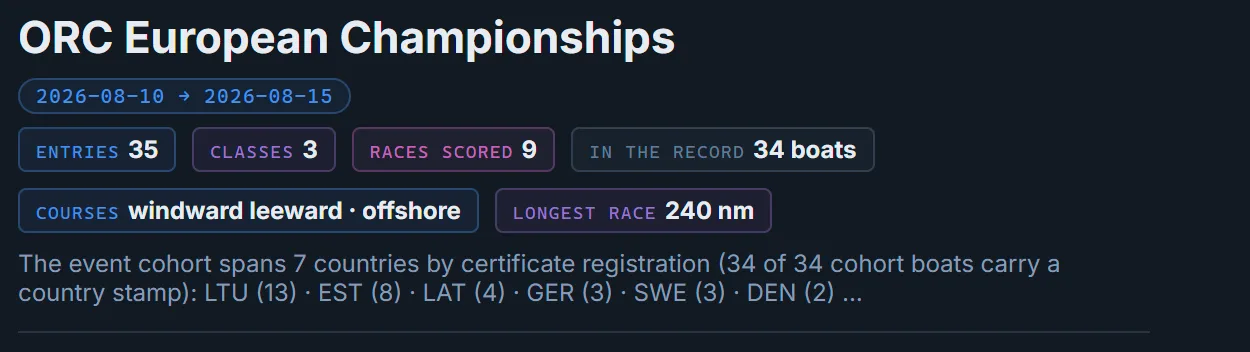
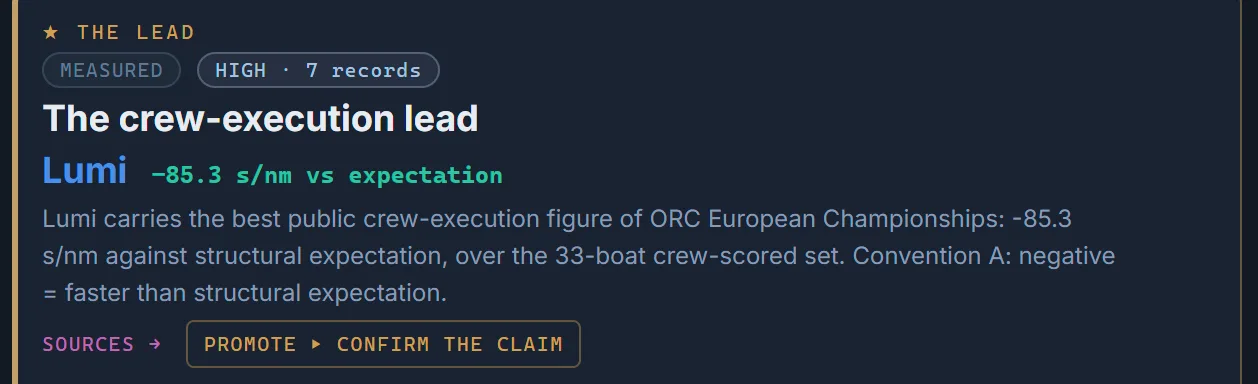
The context behind every figure.
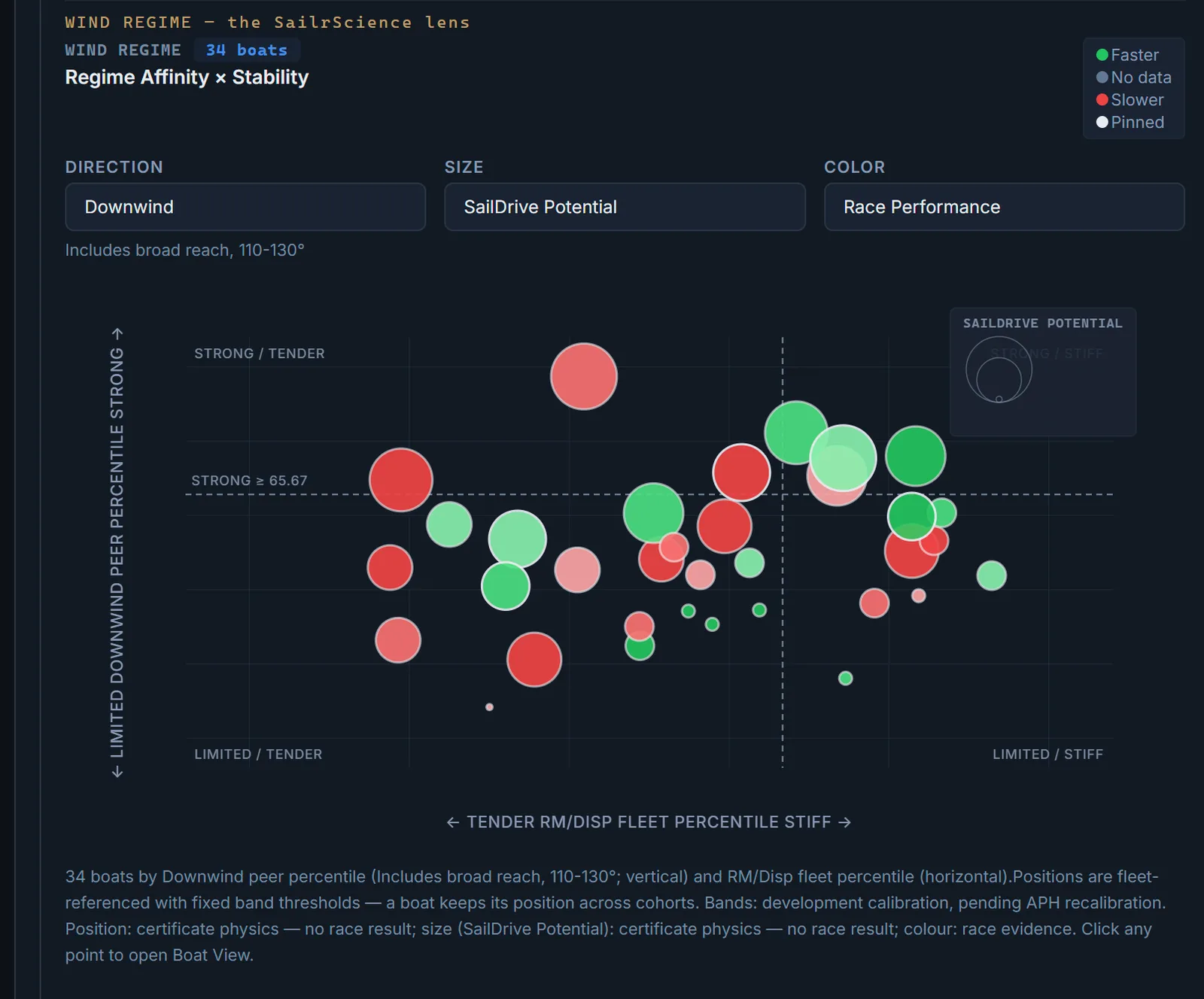
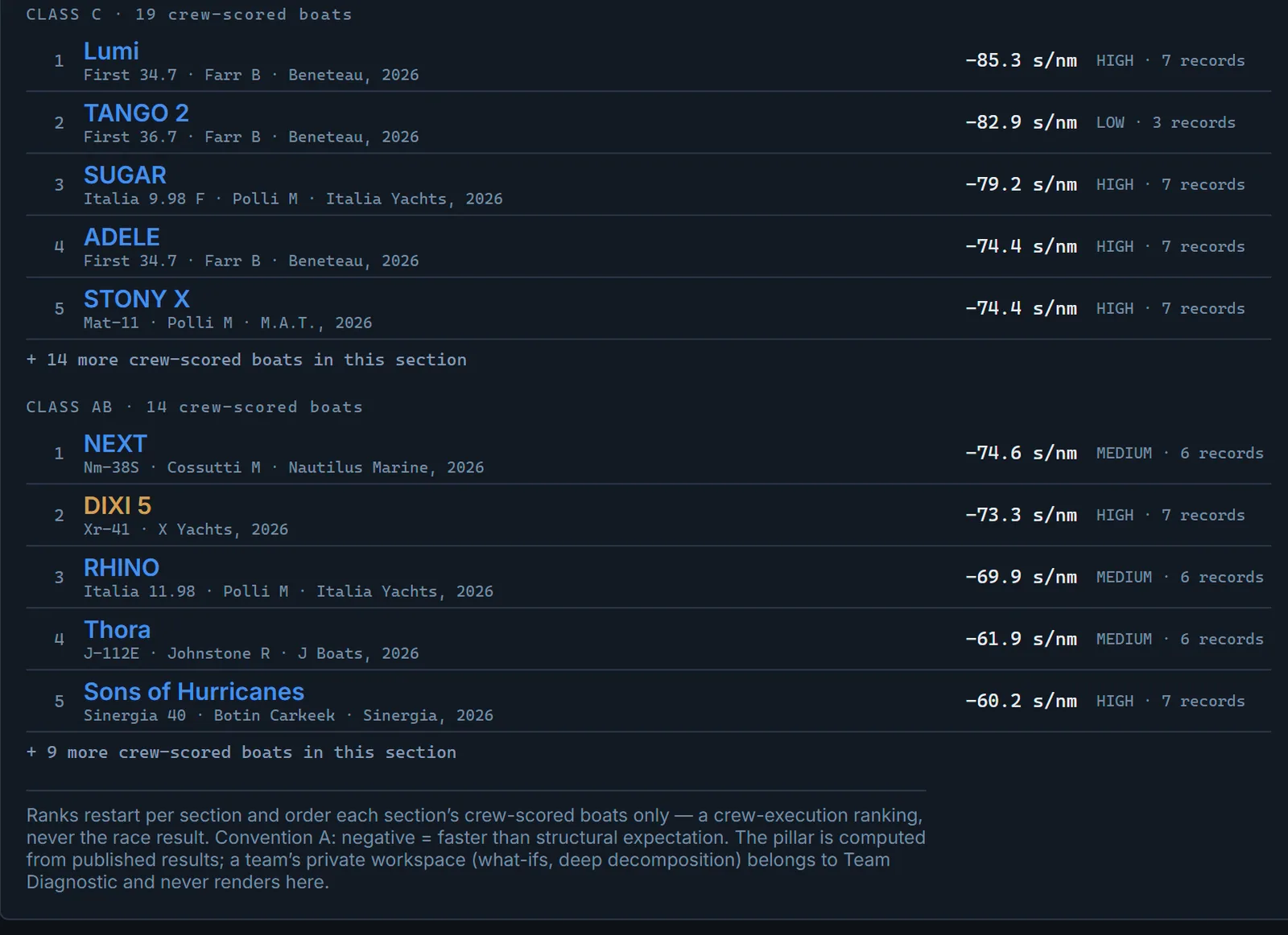
The event cohort (the boats a figure is computed over — a real entry list, a class, a fleet — named on every figure), mapped and ranked. The Wind Regime lens places every boat by regime affinity (how favorably a boat suits a defined wind regime) against stability (how much righting moment the boat carries relative to its displacement) — position from certificate physics, color from race evidence, and that split stated on the canvas itself. The crews behind the results are ranked on the public crew-execution pillar (the crew-execution share of PPI), computed from published results — and the panel’s own footnote draws the line: a team’s private workspace belongs to Team Diagnostic and never renders here.
A governed deck, not a feed.
The desk’s raw material is a ruled deck of story cards over the event cohort — performance verdicts, defining matchups, rating integrity, and the mix of archetypes (the fleet's eight recurring design types). Every card carries its scope subject and exactly one register marker, and a card becomes a story only by clearing the claim chain. When a read has nothing to say, the card says so — an honest empty state is a sentence, never a blank.
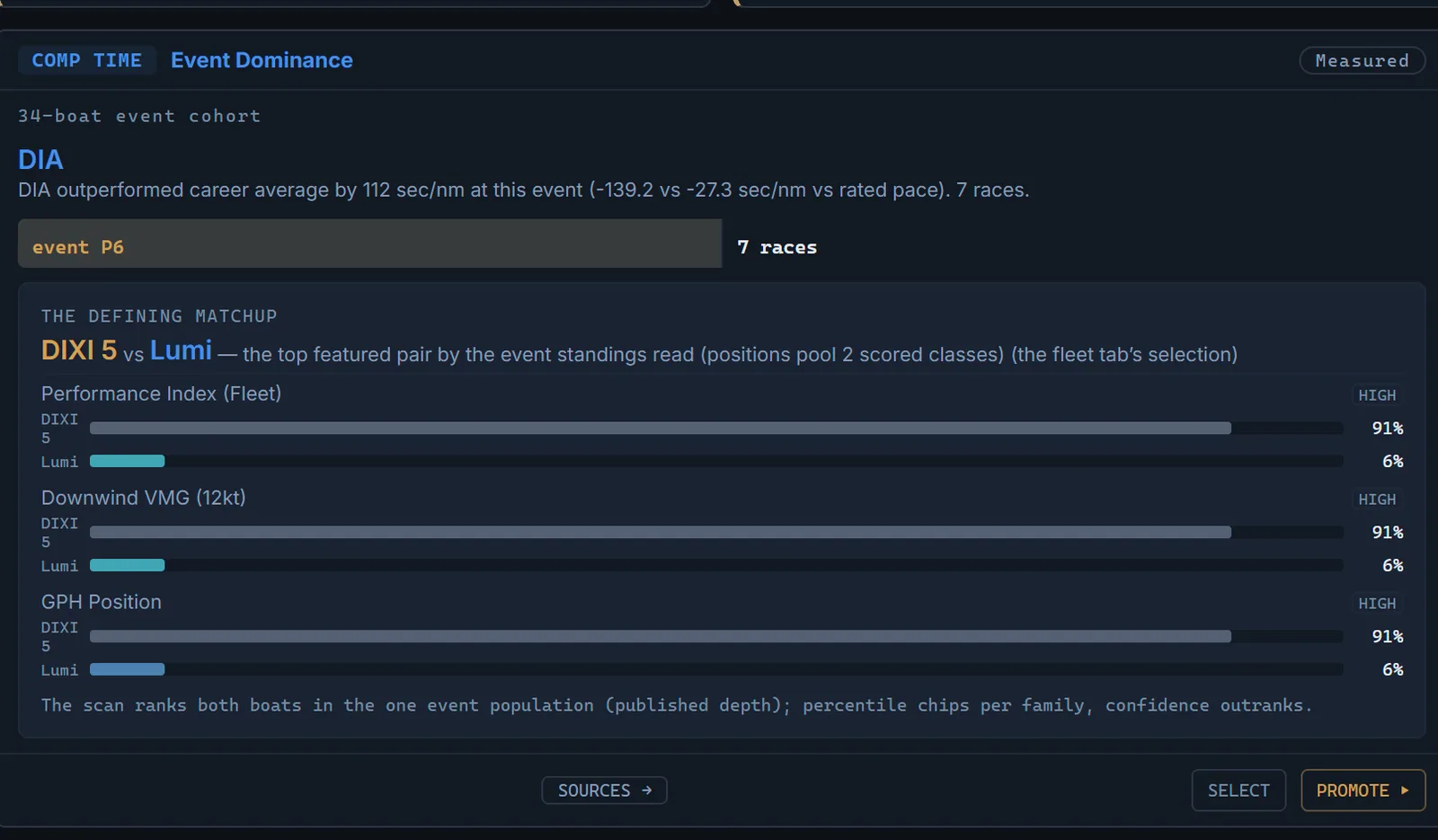
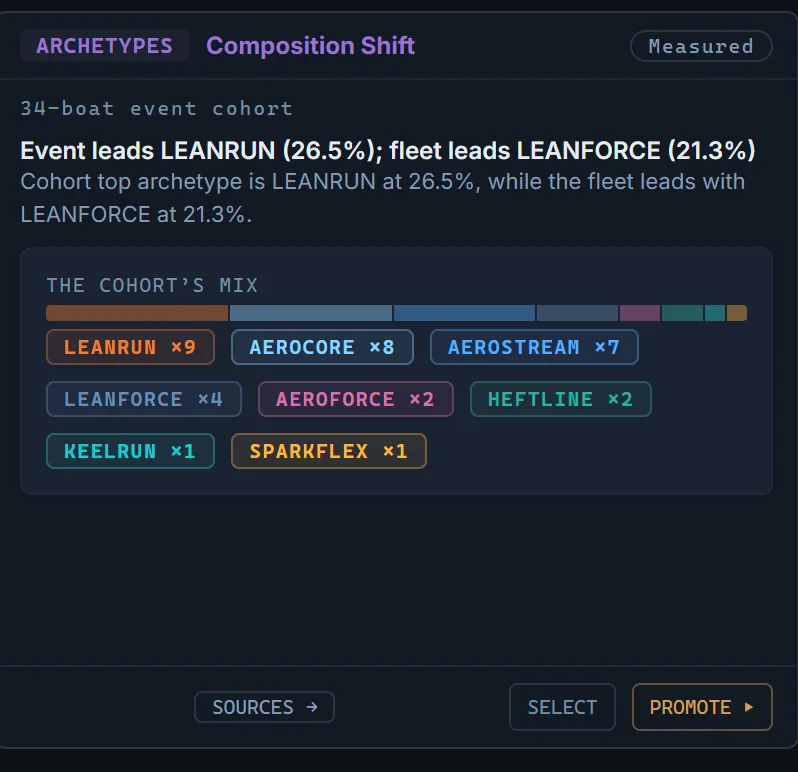
Separation, not speculation.
The watch board is built from separation, not forecasts: each featured boat is scanned against the head of the event read across six instrument families, at published depth, with a confidence chip on every row. The standings language carries the product’s own disclosure — a pooled position is not an outright event win — and the board states its own rule: no scenario, no forecast. One of the board’s own separation reads re-appears in the next section — promoted, chained, and cleared to publish.
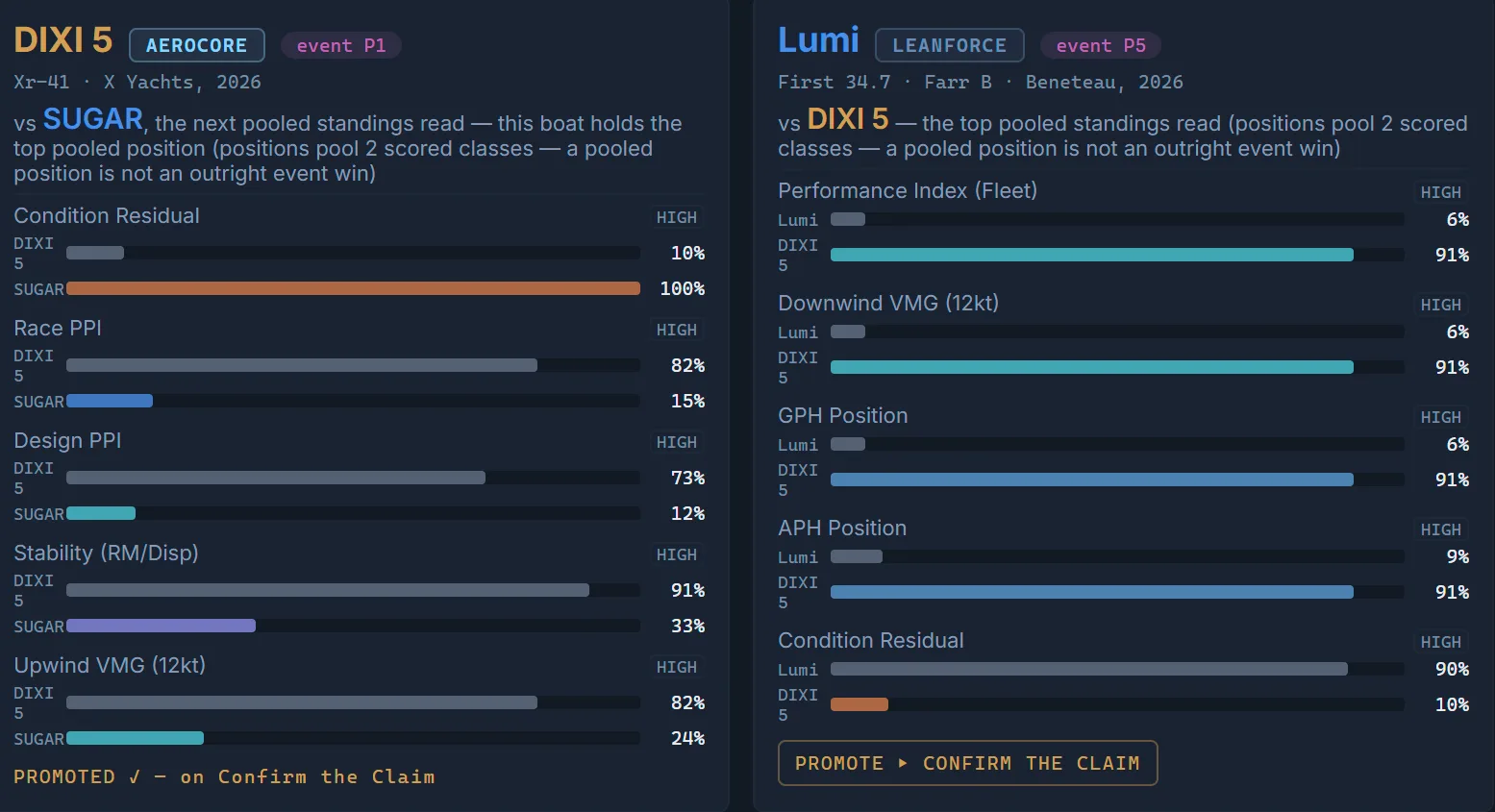
Four links, then publish.
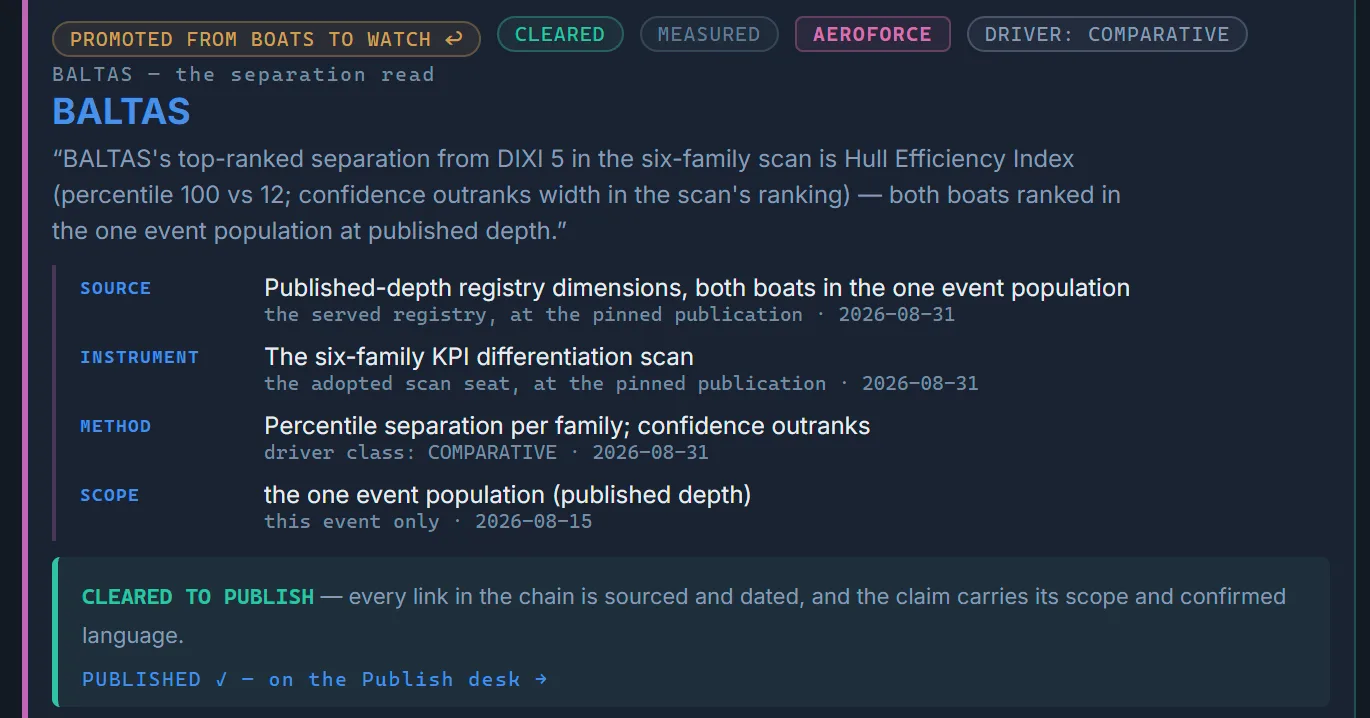
Every promoted story faces the same four-link gate — source, instrument, method, scope — each link named and dated, and the verdict states the rule it cleared under. Only cleared stories reach the publish desk — the second chain below arrived from the watch board and left for the publish rail with its verdict on its face.
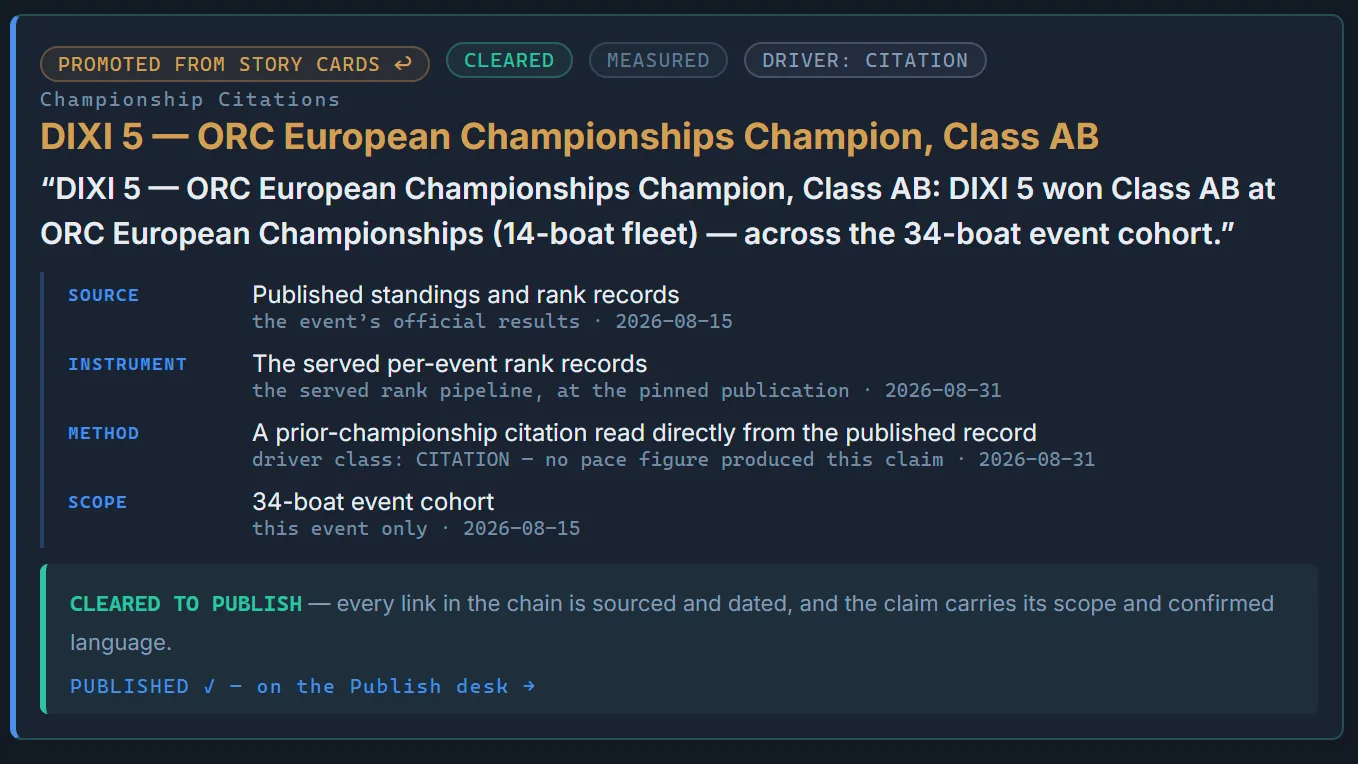
The receipt travels.
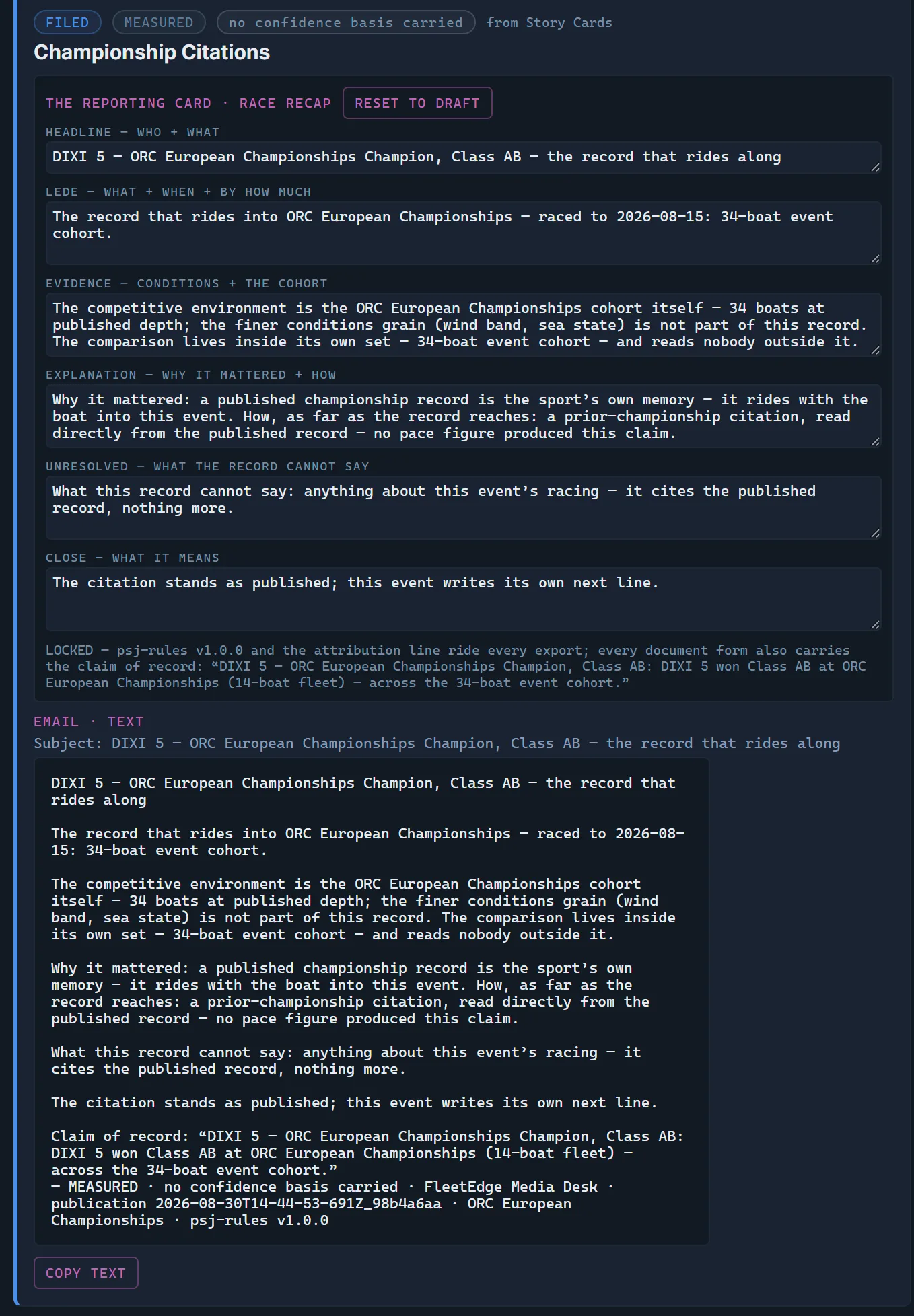
A cleared story composes into an editable reporting card — headline, lede, evidence, explanation, a one-sentence account of what the record cannot say, and the close — with the attribution contract locked beneath it. Formats are local: text and documents to copy or print, the claim of record and the rules stamp riding every one. The desk posts to no platform; the send stays yours.
Media Desk, over the one App.
Built on the FleetEdge platform, curated to the media and content team: an event’s full anatomy — its storylines, its conditions, its classes, its crews — made publishable, with the evidence chain riding along.
History & storylines
The covered event framed on the desk — its dates, courses, and cohort — with the day’s storylines assembled above a working story queue.
Conditions & design fit
The Wind Regime lens reads the cohort by regime affinity against stability — certificate physics for position, race evidence for color, and that split stated on the canvas.
Divisions & classes
The event ranking pools the scored classes and says so; the crew table sections by class, so no boat is read outside its own cohort.
Crews, form & crew PPI
The public crew-execution share of PPI (the Performance Potential Index) — ranked from published results only, with confidence and record counts on every row.
Confirm with provenance
Every claim walks the four-link chain — source, instrument, method, scope — and clears at a verdict that states its rule: every link sourced and dated.
Publish anywhere
One cleared story, re-formatted for web, social, broadcast, or print — the claim of record and attribution locked into every format.
The panels above run on FleetEdge instruments at the product’s own stated tiers — LIVE or PLANNED, declared on each screen: Storylines Story queue Event frame Wind Regime lens Crew pillar · public Story cards Separation board Claim chains Reporting card
Deliberately not here: a team’s private workspace — deep crew what-ifs and rival gap detail belong to Team Diagnostic, and the desk’s crew reads stay at published-results depth. Nothing publishes without its provenance chain, and the desk explains results with evidence — it never alleges a boat was advantaged.
Open. Read. Pull. Place. Prove. Publish.
For class media leads, event communications teams, and sailing-data journalists who cover a race across web, social, and broadcast — and need it accurate, visual, and fast.
- Open the desk — land on the covered event with the storylines assembled and the queue open.
- Read the fleet — the mapped cohort, the ranking, and the crews behind the results.
- Pull from the deck — elect the cards whose reads carry the piece.
- Place the boats — the separation board puts each featured boat against the head of the field.
- Prove the claim — walk the four-link chain — source, instrument, method, scope — and clear it.
- Publish with the receipt — compose the reporting card and take the story to your channel with its attribution locked.
A note on the numbers above — where the figures come from:
1. Every figure on this page reads from the product screens pictured — the desk’s own coverage of the ORC European Championships, captured 1 September 2026 at the product’s publication of 30 August 2026.
2. Boat, event, and corpus counts in the screens are that capture’s own reads, not this site’s published macro figures.
3. The status labels — LIVE, PLANNED — are the product’s own vocabulary, declared panel by panel; a panel’s fence governs its claims, and nothing here claims an unshipped tier early.
4. Crew figures are the public crew-execution pillar, computed from published results only — a team’s private workspace belongs to Team Diagnostic and never renders on the desk.
5. Standings language follows the product’s own pooling disclosure — a pooled position is not an outright event win.
6. Beta access is by request; the walkthrough is the desk’s own coverage of a published championship, not a customer’s work.
Media Desk is built on the FleetEdge story and archetype layer: Fleet Archetypes, the offshore race archive, and the definitions in Data Definitions.
See it against your own work.
Media Desk is in beta — access by request. Scope: public race coverage — everything the desk clears is publishable as-is.